
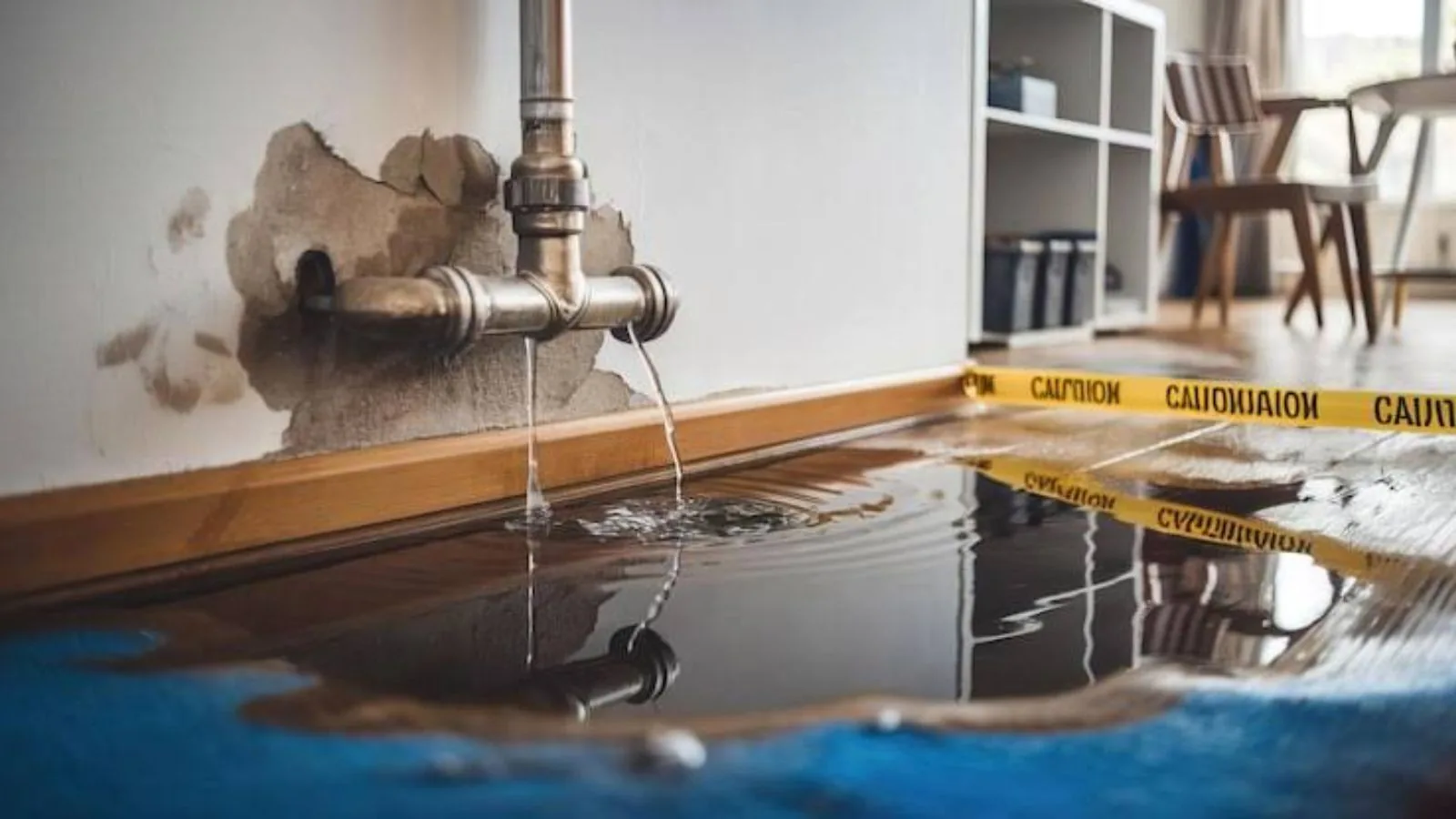
If water is standing in your Sicklerville home right now, treat it as an emergency. The line at (833) 521-1033 is answered 24/7, nights, weekends and holidays included. While you wait, stop the source if the shutoff is safe to reach, lift valuables and electronics off the floor, and keep children and pets out of the water.
Water extraction is the removal of standing water with pumps and extraction units so that structural drying can begin. It is the first physical step on almost every water loss, and it is the step that decides how much of the floor, pad and wall base can still be saved.
When standing water is an emergency
A damp patch you can mop is one thing. Water that covers a floor, soaks carpet pad, reaches a baseboard or pools around a furnace or water heater is another. Water also moves. It travels under walls, into cabinet toe kicks and down through floors into the room below, so a spill that looks contained on the surface can be wet across two rooms underneath.
Stay out if power is involved
If water is near outlets, an electrical panel or a plugged-in appliance, do not step in it. Cut power at the panel only if you can reach it while standing on dry ground, and call the utility or 911 for any sparking, buzzing or gas smell before you call us.
Treat dark or smelly water as unsafe
Water that came from a toilet, a floor drain or outdoors may carry bacteria. Keep skin contact to a minimum and read the sewage and flood notes below before anyone wades in.
How extraction is done
Find and stop the source
A running supply line or a failed hose keeps adding water faster than any pump removes it.
Pump the depth
Submersible pumps clear water that is deep enough to move through a hose.
Extract the surfaces
Truck-mounted or portable extractors and weighted wands pull water out of carpet, pad and flooring.
Hand off to drying
Air movers and dehumidifiers take over once moisture readings show what is left.
Pumping alone leaves a lot behind. A carpet pad can hold several times its own weight in water, and the sub-floor beneath it stays wet long after the surface looks fine. Extraction tools are built to pull from those layers, and moisture meters tell the crew where the water went when it left the visible floor.
What the water category changes
| Category | Typical source | What changes on the job |
|---|---|---|
| 1 | Clean supply line, tank or faucet | Extraction and drying, with porous materials judged by how long they stayed wet |
| 2 | Dishwasher or washing machine discharge, sump overflow | Extraction plus cleaning and disinfecting, and more materials are removed |
| 3 | Sewage backup, rising floodwater, outdoor surface water | Protective gear, containment and removal of porous materials, see sewage backup cleanup and flood damage cleanup |
Water still on the floor?
The line is open 24/7. Call (833) 521-1033 and describe what you are seeing.
What we do not do: yard and pool pumping
Callers sometimes ask us to pump a backyard, a drainage swale or a swimming pool. That is exterior water work and falls outside what we do. Our extraction covers water that has entered a house, garage, basement or business. If the yard is flooding toward your foundation, call the township, but if that water has reached inside, call us.
Why speed matters in Sicklerville homes
Rutgers climate staff describe the Pine Barrens zone, which covers most of Winslow Township, as sandy and porous. Rain outdoors tends to soak into that ground. Water that spills indoors has no such outlet, so it spreads across the floor and wicks into wall bases, which is why a flooded laundry room or kitchen in ZIP 08081 needs pumping before it needs anything else.
Our crews also work in nearby Berlin, Atco, Blackwood and Clementon, and the same logic applies there: the sooner the surface water is out, the fewer materials end up on the curb.
What drives the price of extraction
Water category
Clean, gray and black water are handled differently and priced differently.
Volume and area
Depth, square footage and the number of rooms set the pumping and extraction time.
Materials
Carpet pad, hardwood, laminate and drywall each respond differently to long contact with water.
Access
Stairs, finished basements and tight spaces change equipment and labor.
Drying afterward
Extraction is followed by drying days, and that equipment time is part of the scope.
Coverage for sudden water losses is common under homeowners policies, while flood damage usually is not, so check your policy or ask your insurer before you assume either way. Photographs of the water, the source and the damaged items help any claim. Want your real number? Call (833) 521-1033 and we will explain the scope and price before work starts.
Extraction follows ANSI/IICRC S500, the published standard for water damage work, so ask a crew how it will confirm that pad and subfloor are dry and not only the surface.
Water extraction questions
Do you handle water extraction emergencies at night or on weekends in Sicklerville?
Yes. The phone line is open 24/7 and an emergency call at 3 a.m. gets the same attention as one at noon. Tell us what is wet, whether the source is stopped and whether any water is near electrical equipment, and we will tell you what to do while the job is set up.
Is extraction enough, or does the home still need drying?
Extraction removes the bulk water. The moisture left in pad, sub-floor and wall bases still needs air movers and dehumidifiers, so most jobs move straight into structural drying after the pumps come out.
Can you extract water from a finished basement?
Yes, and the stairs and finishes matter to the plan. See our page on basement water damage cleanup for the specifics of below-grade rooms.
Do you extract water in Berlin, Atco, Blackwood or Clementon?
Those towns are part of our working area along with Sicklerville and the rest of Winslow Township. Call (833) 521-1033 with your address and we will confirm.