
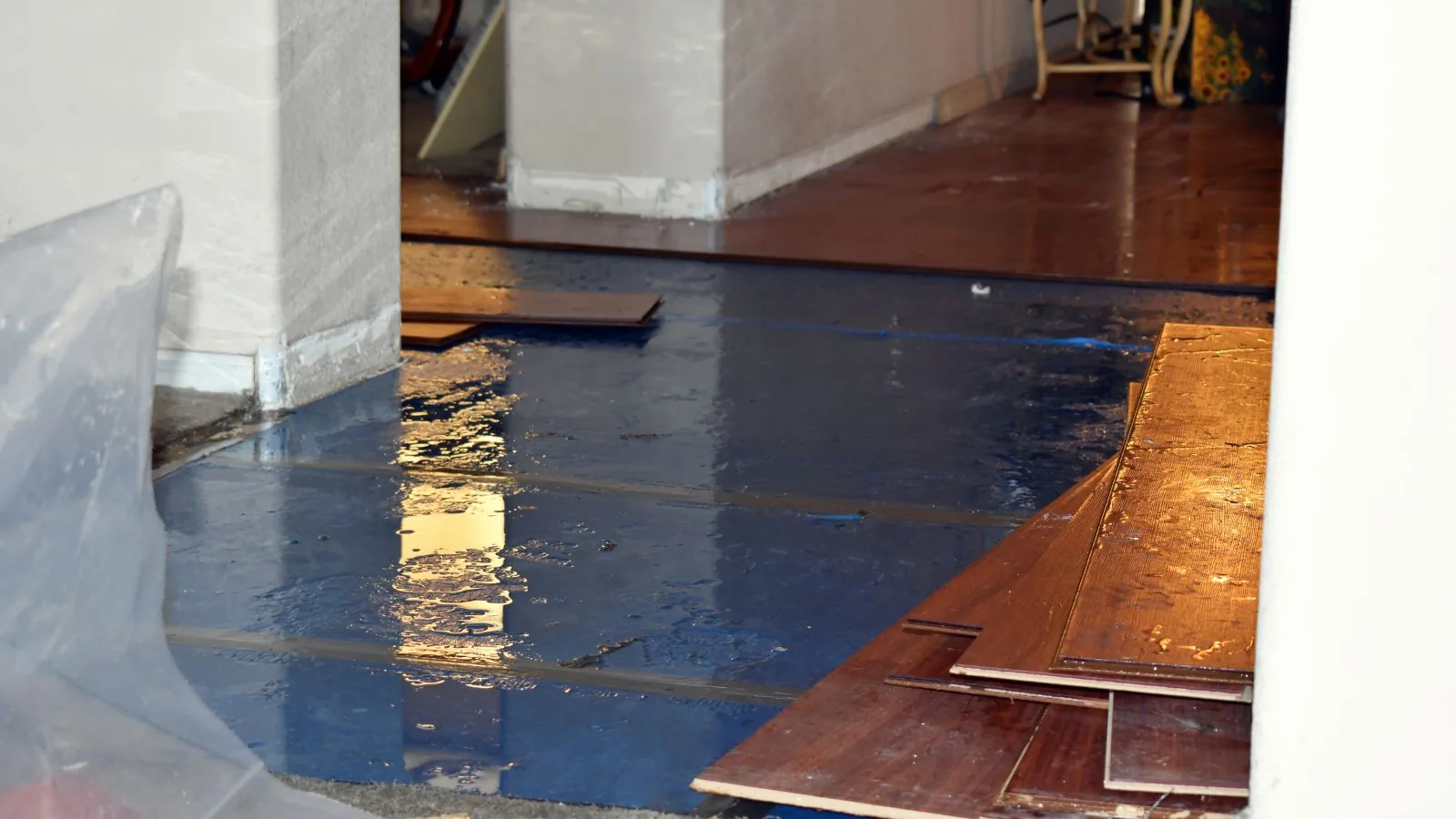
If a storm has pushed water into your home, call (833) 521-1033. The line is open 24/7, including during and after severe weather. Keep out of rooms with sagging ceilings or live wiring, avoid downed lines outside and put pans or plastic under active drips if it is safe.
Storm water damage is the wetting of a building by rain driven through a damaged roof, window, door, wall or vent, as opposed to water rising from the ground. A tarp or temporary roofing is a roofer's job, and we handle the interior water.
Storm damage emergency: first steps
Safety before cleanup
Stay clear of sagging ceilings, broken glass, downed lines and wet electrical equipment.
Protect what you can
Move furniture and electronics away from drips, and lay plastic over items you cannot move.
Call for roof protection
A roofer or tarp contractor stops more rain from entering. Ask them to protect the roof while we work inside.
Document the storm
Take dated photographs of damage inside and out before cleanup.
Storm water versus flood water
Storm water damage here means rain and wind entering through the envelope. Surface and groundwater that rises into a building is flood damage, and it carries different risks, covered on our flood damage cleanup page. A roof leak that is not tied to a storm event is handled under ceiling water damage repair. In a storm, two or all three can happen at once.
| Where water entered | What gets wet | What we do |
|---|---|---|
| Roof or flashing | Attic insulation, ceilings, upper walls | Dry the cavity, replace wet insulation, repair the ceiling |
| Windows and doors | Sills, wall bases, flooring near openings | Extract, dry wall bases, check sub-floor |
| Siding or wall penetrations | Wall cavities and insulation | Open and dry the cavity |
| Basement or garage openings | Floors, contents, finished walls | See basement water damage cleanup |
Storm water inside?
Call (833) 521-1033. We answer 24/7 and will help you set priorities.
Storm history and local context
On September 1, 2021, National Weather Service local storm reports for the Mount Holly area described flooding on State Highway 168 near Lakeland Avenue and Davidstown Road in the Blackwood area, and damage and a funnel cloud report in Wenonah, Gloucester County, during the remnants of Ida. Those reports describe the region, not Sicklerville specifically, and we do not claim Ida damaged any particular Sicklerville street.
Rutgers climatologists say most of New Jersey sees 25 to 30 thunderstorms in a year, and rarely goes a winter without at least one significant coastal storm. For homeowners in ZIP 08081, Berlin, Atco, Blackwood and Clementon, the practical lesson is to check roof edges, flashing and window seals before storm season and photograph your home's condition in advance.
Insurance after storm damage
New Jersey's Department of Banking and Insurance advises policyholders to report losses promptly, to photograph damage to the house and contents and to make reasonable attempts to protect the property from further harm, keeping receipts. It also notes that standard homeowners policies do not cover flooding and that wind-related damage may carry a deductible or other restriction. Read your policy and ask your insurer.
What changes the cost
Entry point
Roof, window and wall openings each lead to different drying.
Duration of exposure
A few hours of rain versus several days under a tarp.
Insulation and ceilings
Wet attic insulation and ceiling board usually come out.
Rooms and levels
Each affected area adds equipment and checks.
Rebuild
Ceilings, drywall, paint and flooring replaced after drying.
We explain scope and price before work starts. Call (833) 521-1033 for Sicklerville and nearby towns.
Storm water is often outdoor water, which S500 (the published ANSI/IICRC standard) treats as contaminated, and that changes which materials can be saved.
Before help arrives
- Stay clear of downed lines and of water that touches them.
- Treat floodwater as contaminated and wear boots and gloves.
- Do not run a household vacuum on water.
- Photograph damage before you clean up and keep your receipts.
Storm water damage questions
Do you handle storm water damage emergencies at night or on weekends in Sicklerville?
Yes. The line is open 24/7. Storm losses often arrive at night and during holidays.
Do you tarp roofs?
No. A roofer handles roof protection and repair. We dry and restore the interior.
Does insurance cover storm water damage?
Wind-driven rain through a storm opening is often covered, while flood is not under a standard policy. Check your policy and ask your insurer.
My ceiling is dripping after a storm but the roof looks fine. Why?
Water can travel along decking and rafters before it drips. The entry point is often higher or to the side of the stain.