
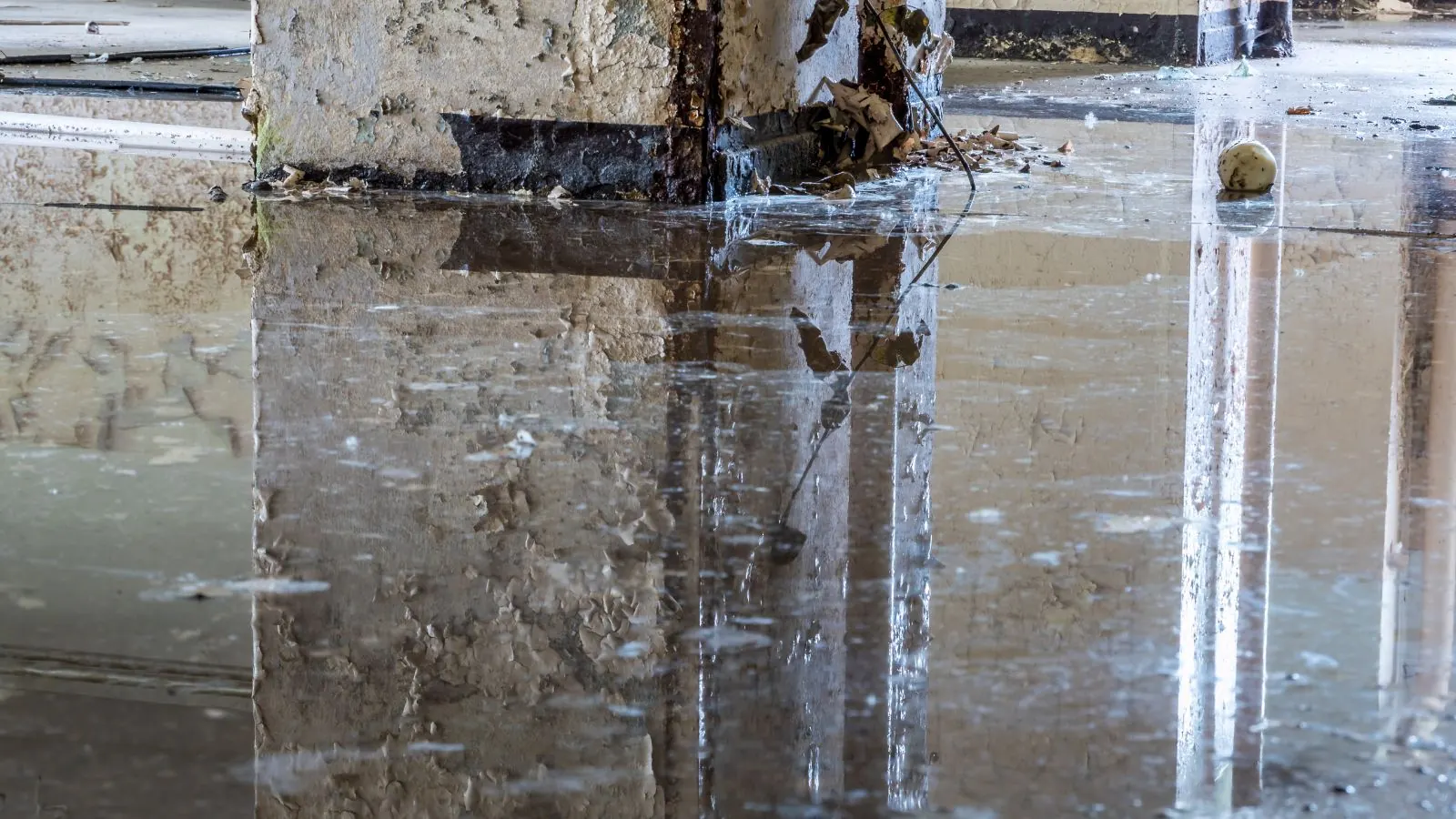
Water damage does not keep a calendar, but patterns do repeat. Cold snaps split pipes, spring rain finds gaps, summer storms dump water fast and autumn leaves clog the gutters that were meant to protect the house. Knowing the pattern lets you check the right things at the right time.
What follows is general. Your own house may have quirks, so note them as you go.
Winter: frozen and burst pipes
The state climatologist notes that Pine Barrens nights can run surprisingly cold, and southern New Jersey's snow season generally runs from about November 15 to April 15. Pipes in exterior walls, garages, crawl spaces and unheated rooms are at most risk.
Keep cabinet doors open on cold nights, let a faucet drip during a hard freeze and know where your main shutoff is. See frozen pipe water damage for what to do if a pipe has already split.
Spring: rain and thaw
Spring brings steady rain on top of thawing ground. Sump pumps work harder, gutters fill and basement walls can seep. Test the pump in March and clear the gutters in early spring.
Watch for stains on basement walls and for efflorescence, the white mineral crust that shows where water has passed through masonry.
Summer: thunderstorms and appliance leaks
Southern New Jersey averages about 25 to 30 thunderstorms a year, and many arrive in summer. Heavy bursts can overwhelm gutters and drains. Air conditioners also produce condensate, and a clogged drain line can overflow into a ceiling or wall. Check the drain line before the season and watch for drips near the air handler.
| Season | Common cause | Quick check |
|---|---|---|
| Winter | Frozen pipes | Insulate exposed lines and keep heat on |
| Spring | Rain, thaw, seepage | Test the sump pump, clear gutters |
| Summer | Storms, AC condensate | Clean the AC drain, check downspouts |
| Fall | Clogged gutters, leaf buildup | Clear gutters, check the roof |
Water damage in any season?
Call (833) 521-1033. The 24/7 line is open all year.
Fall: leaves and the roof
Leaves clog gutters and downspouts, which sends water over the edge and down the walls. Fall is also a good time to look at roof flashing and shingles before winter. A small lift in a shingle can become a ceiling stain after the first heavy rain.
Disconnect and drain outdoor hoses before the first freeze. A hose left attached can trap water in the spigot and split the pipe behind the wall.
Year round: appliances and plumbing
- Replace washing machine hoses on a schedule, and consider braided steel hoses.
- Check the water heater for rust, puddles and drips.
- Look under sinks for damp cabinets and stains.
- Know where your water main shutoff is and make sure it turns.
- Watch your water bill for unexplained increases.
When water gets in anyway
Even careful homeowners have losses. When water gets in, the steps are the same in every season. Stop the source, protect yourself, photograph the damage and begin drying. Our page on water extraction explains the first stage, and the service area page lists the nearby towns we serve.
A yearly maintenance calendar
| When | Task |
|---|---|
| March | Test the sump pump and clear gutters |
| May | Inspect the roof and check window and door seals |
| June | Clean the air conditioner drain line |
| September | Replace aging washing machine hoses |
| October | Clear gutters again and drain outdoor hoses |
| November | Insulate exposed pipes and check heat in vacant rooms |
A calendar like this takes the guesswork out of maintenance. Pick the dates that suit your household, put them in your phone and tick each one off. If a task reveals a problem, a stain or a drip, deal with it while it is small.
Water damage is easier to prevent than to repair, and most prevention is cheap. The expensive part is waiting until the damage shows.
Small signs that deserve attention
- A faint stain on a ceiling after the first heavy rain of the season.
- A basement that smells damp only in spring.
- A window sill that stays wet after storms.
- A faucet that drips only on cold nights.
Each of these is a clue about where water is getting in. Note the date, take a photo and fix the cause before the next season arrives.
Keep notes from year to year. A short list of what you found and fixed each season shows patterns, such as a gutter that overflows every autumn, and it helps you or a later owner prevent the same loss twice.
Whatever the season, the published ANSI/IICRC S500 standard describes how a wet structure is measured and dried.
Local question
When does the freeze risk start for Sicklerville pipes?
Southern New Jersey's snow season generally runs from about mid November to mid April. Hard freezes can happen at either end. Insulate exposed lines before the first cold snap and keep the heat on in vacant rooms.
What the state climatologist says
The Office of the New Jersey State Climatologist at Rutgers reports that southern New Jersey sees roughly 25 to 30 thunderstorms in a year and that its snow season runs from about November 15 to April 15. It also notes surprisingly low overnight lows in the Pine Barrens.
Those lows matter for pipes. A house with exterior wall plumbing or an unheated crawl space can freeze on a night that feels mild in the middle of town.